
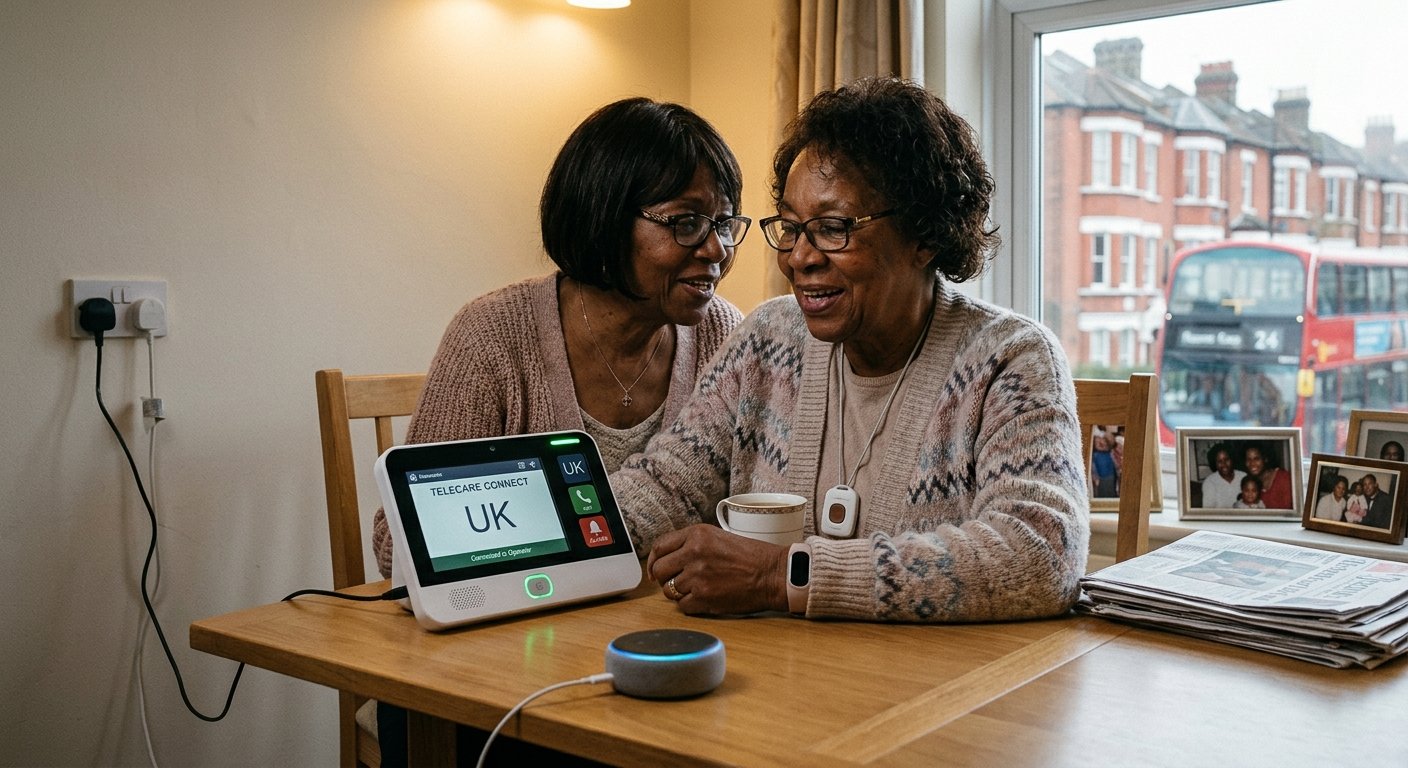
The digital landline switch means the old copper phone network in the UK will be turned off by 31 January 2027, and every home landline is moving to a digital service. For many households, the change will be quick and simple, but telecare alarms need extra care.
However, if you or someone you care for uses a telecare alarm, relies on a landline in an emergency, or has poor mobile signal, you should act now rather than wait. This guide explains what is changing, what it means for your home phone and alarm, and the simple steps to take before the deadline.
This guide contains affiliate links. If you buy through them, we may earn a small commission at no extra cost to you.
What is the digital landline switch and when does it happen?
The switch replaces the old analogue landline network, known as the PSTN, so that calls are carried over a broadband connection instead. You may see this called Digital Voice, VoIP or All IP. For telecare, the deadline for the switch is the end of January 2027.
The old network is wearing out, and spare parts are no longer made. In fact, Ofcom reported a 45 per cent rise in faults on the network in 2024.
The original deadline was December 2025. However, it was pushed back to protect vulnerable customers, especially telecare users. Openreach, which runs most of the network, has said the new date will not move again.
The switch is already well under way. Over two thirds of UK landlines have already moved to digital, but around 1.9 million lines were still left to switch in June 2026.
What it means for your home phone
For most people, very little changes. You keep your phone number, and you make and receive calls in the same way. Your phone provider, the company named on your bill, will contact you before your line is moved, and they must give you at least four weeks’ notice.
If you already have broadband, the change may be as simple as plugging your phone into your broadband router instead of the socket on the wall. Some older phones may need an adaptor, which your provider should supply. In some cases, an engineer will also visit to check everything works.
If you do not have broadband, you will not be forced to get it. Some providers offer a dedicated landline service that keeps you connected without broadband until a digital option is ready, or until 2030 at the latest. Openreach has also said there will be no sudden mass disconnection of home phone lines on 1 February 2027. If you do decide to get broadband, our guide to broadband deals for light users can help you keep costs down.

What it means for telecare and personal alarms
Telecare alarms are the main reason for the delay, and the area that needs most care. These are pendants, wrist alarms and base units that let someone call for help at the touch of a button. Many older units were built to work on analogue lines, so they may not work reliably on a digital one.
The good news is that safeguards are now in place. Openreach uses a process called Prove Telecare. First, an engineer tests the alarm with the monitoring centre before the switch. Next, they carry out the upgrade and test it again. If the alarm cannot be made to work, the line is put back as it was, so the person is not left without help.
More than 35,000 of these checks had been completed by June 2026. Even so, these checks only happen if your phone provider knows you have an alarm. Councils and alarm companies have been asked to share this information, but not all have done so. The safest step, therefore, is to tell your phone provider yourself.
For more on personal alarms and fall detection, see our guide to smart speakers and health gadgets that help older people live independently.
Power cuts and telecare backup
This is the biggest practical difference. An old analogue phone drew its power from the phone line, so it kept working in a power cut. By contrast, a digital phone runs through your broadband router, which needs mains electricity. When the power goes off, so does the phone, including for 999 calls, unless you have a backup. The same can apply to a telecare alarm that connects through the router.
Providers must offer at least one way to reach emergency services during a power cut, and this must be free for people who depend on their landline. It is usually a battery backup unit for the router.
One hour is the legal minimum, yet some power cuts last much longer. So ask your provider how long their backup unit lasts. It is also sensible to keep a charged mobile phone and a small power bank in the house, so you have a second way to call for help. Our pick of the best phones for older people includes simple models that are ideal for this, and our guide to being ready for a power cut covers the rest of the kit worth having.
Protections for telecare users and vulnerable customers
In December 2023, the main phone companies, including BT, Sky, Virgin Media O2 and TalkTalk, signed a charter of promises to protect telecare users and other vulnerable customers. Under it, providers work with councils to find people with alarms and give them extra support during the switch.
That support can include a free engineer visit and a free battery backup for the alarm and the phone where needed. If you think you or a relative may be vulnerable, call your phone provider and ask to be added to their priority or vulnerable customer register.
Telecare checklist: what to do now
- List everything plugged into your phone socket. This could include a telecare alarm, a burglar alarm, a door entry system or a fax machine.
- Call your phone provider, using the number on your bill. Tell them about any alarm and ask how and when your line will be moved.
- Ask your alarm company whether your unit works on a digital line. Get the answer in writing if you can.
- Ask your phone provider about a free battery backup, and how many hours it lasts.
- Keep a charged mobile phone and a power bank at home as a second way to call for help.
- After the switch, test your alarm with the monitoring centre to make sure it still connects.
If you look after an older relative, it is worth doing these steps together. After all, many people do not know their alarm runs through the phone line.
Beware of scams
Any big change attracts scammers, and older people and telecare users are often targeted. Your real provider will be the company named on your bill, so do not confuse its letters with sales mail from other firms.
Be wary of any cold call, text or visitor who says your phone will be cut off unless you pay, or who asks for bank details to ‘upgrade’ your line. If you are unsure, hang up and contact your provider using the number printed on your bill.
You can also forward scam texts to 7726, a free service run by the phone networks. Our guide on how to spot a scam text, call or email has more tips.
Telecare and the digital landline switch: the bottom line
In short, the digital landline switch will be simple for most homes, but telecare users need to act now. Tell your phone provider about any alarm, ask for a free battery backup, and keep a charged mobile phone to hand. Then test the alarm after the switch, so you know help is still only a button press away.