
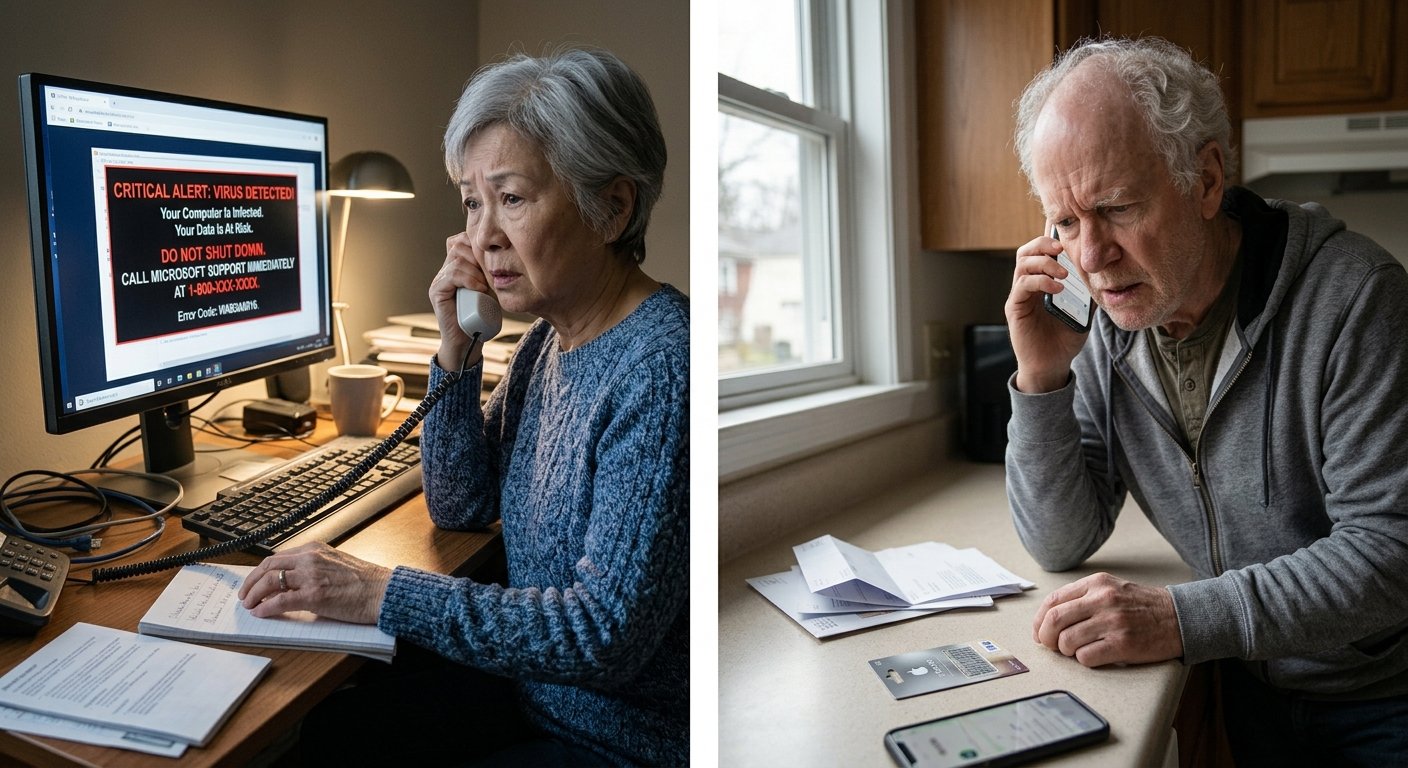
Knowing how to spot a scam has never been more important, because scammers are getting more convincing. Messages can look exactly like they come from your bank, a delivery company or HMRC, and some now use artificial intelligence to copy real voices. The good news is that almost every scam shares the same warning signs, so once you know them, they are much easier to spot.
Last updated October 2026.
How to spot a scam: five warning signs
- Pressure to act now. Phrases like “your account will be closed today” are designed to stop you thinking.
- A request for money, passwords, PINs or codes. Your bank will never ask for your PIN or a one time passcode.
- A link or attachment you did not expect.
- Being told to keep it secret or not to speak to your bank.
- Something that seems too good to be true, such as a surprise refund or prize.
Common scams to watch for
- Fake delivery texts asking you to pay a small fee to rearrange a parcel.
- Fake parking fine or toll texts asking you to pay through a link.
- Messages claiming to be from HMRC about a tax refund.
- “Hi Mum” or “Hi Dad” messages from an unknown number, claiming to be your child with a new phone and asking for money.
- Calls from your “bank” telling you to move money to a safe account. No genuine bank will ever ask you to do this.
- Calls, texts or pop ups asking you to install an app so someone can “fix” your computer or bank account. Never let a stranger take control of your device.
- Fake calls about your phone line claiming it will be cut off unless you pay. Our guide to the digital landline switch explains what genuine providers will do.

What to do if you spot a scam
First, stop, and do not click, reply or call any number in the message. If you are unsure, contact the organisation using a number or website you already trust, such as the number on the back of your bank card.
- Forward scam texts to 7726, free on most networks.
- Forward scam emails to report@phishing.gov.uk.
- Call 159 if you get a suspicious call claiming to be your bank. Hang up first, then dial 159 to connect safely to most major UK banks.
- Report fraud online at reportfraud.police.uk or call 0300 123 2040. In Scotland, call Police Scotland on 101.
If you have lost money
Call your bank straight away using the number on your card. The sooner you act, the better the chance of stopping the payment.
Since October 2024, banks must refund most victims of bank transfer scams, up to £85,000. So do not let embarrassment stop you from reporting it.
For more on keeping your money safe, read our guide to banking for older people, which covers apps, cards and getting help from family.
A simple family tip
Agree a family password that only your family knows. Then, if someone calls or messages claiming to be a relative in trouble, ask for the password. A scammer will not know it.
It also helps to keep your devices up to date. If you are still using an older computer, read Is your old computer still safe to use? to check it is protected. Running a small charity? See our guide to keeping your small charity safe online.
The bottom line
In short, learning how to spot a scam comes down to a few warning signs: pressure to act, requests for money or codes, and unexpected links. When in doubt, stop and contact the organisation on a number you trust. Share this guide with family and friends, because a two minute conversation could save someone a great deal of money and worry.