
Simple gadgets can help prevent falls at home, which matters because falls are one of the most common reasons older people end up in hospital. A fall can also knock someone’s confidence long after any injury has healed. The good news is that many falls can be prevented, and a few low cost changes take only minutes to set up.
Good Sense Guide may earn a small commission if you buy through links on this page, at no extra cost to you. This helps us keep the site running.
Below are the gadgets we think are worth buying, what each one does, and what to look for before you spend any money.
Motion sensor night lights to prevent falls at home
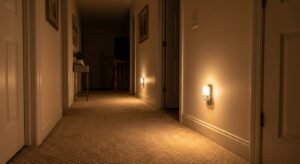
Many falls happen at night, often on the way to the bathroom. Motion sensor lights switch on by themselves when someone walks past, so nobody has to feel along the wall for a switch in the dark.
Look for lights with adjustable brightness and a warm glow that will not disturb sleep. Then place them along the route from the bed to the bathroom, and at the top and bottom of any stairs. Rechargeable models also save the cost of replacing batteries.
See motion sensor night lights on eBay
Grab rails to help prevent falls at home
A grab rail gives something steady to hold when sitting down, standing up or stepping over a threshold. The most useful places are beside the toilet, next to the bath or shower, and by the front and back doors.
Suction rails are cheap and need no drilling, but they can come loose without warning. For that reason, they are best kept for travel or short term use. For everyday support, choose a screw fixed rail fitted into a solid wall. In addition, a rail in a bright, contrasting colour is easier to see for anyone with poor eyesight.
See screw fixed grab rails on eBay
Non slip bath and shower mats
A non slip mat is one of the cheapest ways to prevent falls at home, and one of the most useful. Wet enamel and tiles are slippery, whereas a mat gives feet a firm grip.
Choose a mat with plenty of strong suction cups and drainage holes, so water does not collect underneath. A machine washable mat is easier to keep clean. Finally, replace it when the suction starts to weaken, and add a non slip mat outside the bath too.
See non slip bath mats on eBay
Personal alarm with fall detection
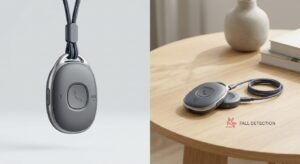
A personal alarm is worn as a pendant or wristband. Pressing the button calls a monitoring centre or a family member for help. Some models can also detect a fall automatically and raise the alarm, even if the wearer cannot press the button. An alarm cannot prevent falls at home on its own, but it means help arrives quickly if one happens.
Before signing up, compare monthly fees, set up charges and contract length carefully. Also check whether the alarm works only inside the home or when out and about too, and whether it is waterproof so it can be worn in the shower.
If an older alarm runs through a landline, ask the provider to confirm it will keep working as phone lines move to digital. Our guide to the digital landline switch explains what to ask.
See personal alarms with fall detection on eBay
Smart speaker
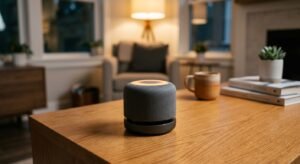
Smart speakers such as the Amazon Echo let someone call family, set reminders or switch on lights just by speaking. As a result, they can be a real help if someone cannot reach the phone.
However, most smart speakers cannot call 999, so they are not a replacement for a personal alarm. Set up the contacts in advance and practise making a call together, so it feels familiar. Our guide to smart speakers and health gadgets explains more.
See Amazon Echo smart speakers on eBay
Grabber tool
A grabber tool makes it possible to pick things up from the floor or reach a high shelf, without bending down or climbing on a chair. That makes it a simple way to prevent falls at home. Look for a lightweight model with a comfortable handle and rubber tipped jaws that can grip small items.
Free help to prevent falls at home
You do not have to do everything yourself. Your local council’s adult social care team can arrange a home assessment, usually carried out by an occupational therapist. In England, small adaptations costing under £1,000, such as grab rails, are usually provided free to people who are assessed as needing them.
A GP can also refer someone to a local falls prevention service, which may offer strength and balance classes. These are well worth asking about, because stronger muscles and better balance are among the most effective ways to prevent falls. The NHS falls prevention advice and Age UK have more tips.
A key safe is also worth considering, so carers or paramedics can get in quickly if someone does fall.
Our advice on how to prevent falls at home
First, start with good lighting and a non slip bath mat. Then add grab rails where they are needed most, and consider a personal alarm. For help when out and about, see our guide to going out safely in your eighties.
In short, the best way to prevent falls at home is a mix of simple, low cost changes. None of them is expensive, but together they can help someone stay safe, confident and independent at home for longer.