
Going out safely helps keep you active, independent and connected to friends. In your eighties, a few simple gadgets can give you, and your family, real peace of mind.
Good Sense Guide may earn a small commission if you buy through links on this page, at no extra cost to you.
Below, we look at the gadgets worth considering, the free phone settings that help, and some simple habits for every trip out.

Gadgets for going out safely
GPS personal alarm
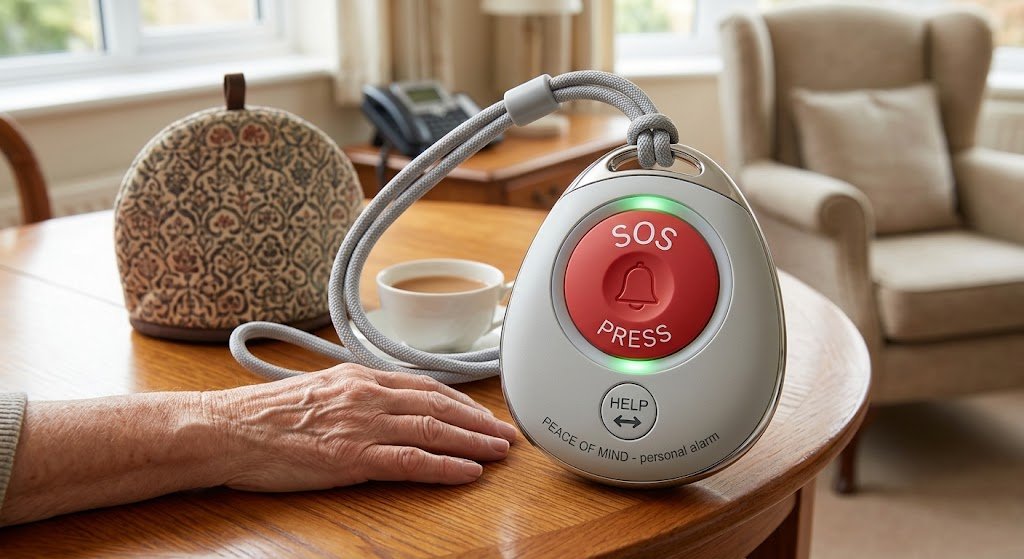
This is a small button you wear on a lanyard or keep in a pocket. Press it, and it calls family or a monitoring centre and shares where you are. Many also detect falls and call for help on their own.
Before you buy, check whether there is a monthly fee, because some alarms need a subscription to work. Also check how long the battery lasts between charges.
GPS alarms on Amazon | Personal alarms at Argos
Smartwatch with fall detection
Some smartwatches, such as the Apple Watch and some Samsung Galaxy Watch models, can call for help automatically after a hard fall. That makes them a good aid to going out safely. However, they work best for people who already use a smartphone and are happy to charge a watch every day or two.
Smartwatches on Amazon | Smartwatches at Argos
Stay visible after dark
A clip on light or a walking stick with a built in torch helps you see the pavement. Just as importantly, it helps drivers see you, which is key to going out safely in winter.
Walking stick lights on Amazon | Walking sticks at Argos
Carry a power bank
A small charger keeps your phone working on a long day out. Choose a slim one that fits in a coat pocket or handbag.
Power banks on Amazon | Power banks at Argos
Free phone settings for going out safely
Share your location
iPhones and Android phones can share your location with chosen family members. On an iPhone, this is in the Find My app. On an Android phone, you can do it through Google Maps. As a result, your family can check you got home safely without needing to ring.
Set up Medical ID
Your phone can show emergency contacts and health details on the lock screen. That way, paramedics can see them without your passcode. On an iPhone, this is called Medical ID, while most Android phones call it emergency information. If your phone is hard to use, our guide to the best phones for older people suggests simpler models.
Going out safely: simple habits
- Tell someone your plans. Let them know where you are going and when you expect to be back.
- Charge your phone first. Carry a power bank too if you will be out for several hours.
- Choose your route. Pick well lit streets with places where you can sit and rest.
- Wear comfortable shoes. Choose a pair that fits securely and grips well.
- Take your time. Cross roads at your own pace, and do not feel rushed by other people.
- Have a plan B. If the weather changes, turn back or ask someone you trust for help.
- Test your alarm. Try any alarm or fall detection feature regularly, so you know how it works before you need it.
Going out safely and enjoying it
In short, going out safely is mostly about a little planning and the right bit of kit. For more ideas, see our guide to item trackers for keys, wallets and bags and our advice on smart speakers and health gadgets for independent living. If you also want to feel safer at home after dark, our guide to motion sensor night lights may help. You can also find information and advice from Age UK.